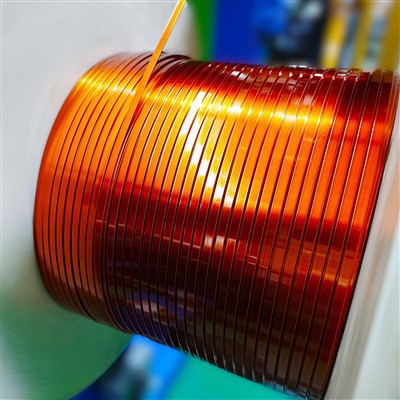
As a supplier of Continuously Transposed Conductors (CTCs), I’ve had the privilege of engaging with these remarkable electrical components on a daily basis. CTCs are specialized conductors widely used in power transformers, reactors, and other high – power electrical equipment. Their unique manufacturing process and structure endow them with a set of electrical properties that make them a top choice in the industry. Continuously Transposed Conductors
1. Low AC Resistance
One of the most prominent electrical properties of CTCs is their low AC resistance. In high – power electrical applications, especially when dealing with alternating current (AC), the skin effect and proximity effect come into play. The skin effect causes the current to be concentrated near the surface of the conductor, increasing the effective resistance as the frequency of the current rises. The proximity effect further exacerbates this issue when multiple conductors are placed close to each other.
CTCs are designed to mitigate these effects. The continuous transposition of individual strands ensures that every strand occupies every possible position within the conductor cross – section over a certain length. This equalizes the magnetic field distribution around each strand, reducing the non – uniform current distribution caused by the skin and proximity effects. As a result, the overall AC resistance of the CTC is significantly lower compared to non – transposed conductors of the same cross – sectional area.
A lower AC resistance means less power loss in the form of heat generated during the flow of current. In large power transformers, where efficiency is of utmost importance, CTCs can help to improve the overall efficiency of the system. For example, in a transformer that handles large amounts of AC power, even a small reduction in resistance can lead to substantial savings in energy consumption over time.
2. Good Insulation Performance
The insulation performance of CTCs is crucial for their reliable operation in electrical equipment. Typically, CTCs are insulated with high – quality materials such as enamel, paper, or film. The insulation should be able to withstand high voltages without breakdown, prevent short – circuits between strands, and protect the conductor from environmental factors such as moisture, dust, and chemical contaminants.
The insulation material used in CTCs is carefully selected based on the specific application requirements. For instance, in high – voltage transformers, a thick layer of paper insulation might be used because it has good dielectric strength and can withstand high temperatures. Enamel insulation is often used for smaller – scale applications where a thin and flexible insulation layer is required.
Proper insulation also helps to maintain the integrity of the electrical properties of the CTC. It ensures that the current flows only through the intended conductive paths and reduces the risk of leakage currents. This is essential for the safety and long – term performance of the electrical equipment in which the CTCs are installed.
3. High Current – Carrying Capacity
CTCs are capable of carrying large amounts of current due to their unique structure and material properties. The continuous transposition of strands allows for a more uniform current distribution, which in turn enables the conductor to handle higher currents without overheating.
In addition, the selection of high – conductivity materials such as copper or aluminum for the strands contributes to the high current – carrying capacity. Copper, in particular, is a popular choice because of its excellent electrical conductivity, resistance to corrosion, and mechanical strength.
The high current – carrying capacity of CTCs makes them suitable for applications in high – power electrical systems. For example, in large power transformers that are used in power generation plants and substations, CTCs can carry the high currents required to transmit and distribute electrical energy efficiently.
4. Stable Inductance
Inductance is an important electrical property in electrical circuits, especially in transformers and reactors. CTCs exhibit relatively stable inductance characteristics due to their symmetrical and uniform structure. The continuous transposition of strands helps to reduce the magnetic coupling between different parts of the conductor, resulting in a more predictable and stable inductance value.
In power transformers, stable inductance is essential for maintaining the proper voltage ratio and power transfer efficiency. A stable inductance value ensures that the transformer operates as designed, without significant fluctuations in performance. This is particularly important in applications where the electrical load is variable, such as in industrial power systems.
5. Compatibility with High – Frequency Applications
Although CTCs are commonly used in power frequency applications (50 Hz or 60 Hz), they also have good performance in high – frequency applications. As the frequency of the current increases, the skin effect and proximity effect become more pronounced. However, the transposed structure of CTCs helps to minimize the impact of these effects, allowing them to operate effectively at higher frequencies.
In some specialized applications such as high – frequency transformers used in electronic devices, CTCs can provide a reliable solution. Their ability to handle high – frequency currents while maintaining low resistance and stable electrical properties makes them suitable for use in these demanding environments.
6. Thermal Stability
Thermal stability is an important consideration for electrical conductors, especially in high – power applications. CTCs have good thermal stability due to their low AC resistance and uniform current distribution. The lower resistance means less heat is generated during the flow of current, and the uniform current distribution helps to prevent hot spots from forming within the conductor.
In addition, the insulation materials used in CTCs are selected to have good thermal properties. They can withstand high temperatures without degrading, which ensures the long – term reliability of the conductor. For example, in a power transformer that operates continuously under heavy loads, the thermal stability of the CTCs helps to prevent premature insulation failure and extend the service life of the transformer.
If you’re in the market for Continuously Transposed Conductors and are looking for a reliable supplier to meet your diverse electrical needs, I’d be delighted to assist you. Whether you’re involved in power generation, electrical equipment manufacturing, or any other sector that requires high – performance conductors, we have the expertise and products to fit your requirements. With our in – depth understanding of the electrical properties of CTCs, we can provide tailored solutions that ensure optimal performance and reliability for your electrical systems. Don’t hesitate to reach out to us to start a discussion about procurement and find out how our CTCs can enhance your projects.
Continuously Transposed Conductors References
- Grover, F. W. (1946). Inductance Calculations: Working Formulas and Tables. Dover Publications.
- Pesaran, A. A. (1994). An analysis of stranded conductors for ac power applications. IEEE Transactions on Power Delivery, 9(1), 347 – 353.
- Westinghouse Electric Corporation. (1964). Electrical Transmission and Distribution Reference Book. Westinghouse Electric Corporation.
Tianjin Jingwei Power Technology Co., Ltd.
As one of the most professional continuously transposed conductors manufacturers and suppliers in China, we’re featured by quality products and good service. Please rest assured to buy durable continuously transposed conductors made in China here from our factory. Contact us for more details.
Address: No.1 Chuangxin Rd. Xiaozhan Industrial Park, Jinnan District, Tianjin, China
E-mail: info@jwdc.cn
WebSite: https://www.jw-dcs.com/
