Monitoring the performance of industrial RO (Reverse Osmosis) equipment is crucial for businesses to ensure efficient water treatment, reduce operational costs, and extend the lifespan of the equipment. As a supplier of industrial RO equipment, I understand the significance of providing our customers with the knowledge and tools to monitor their equipment effectively. In this blog, I will share some practical tips on how to monitor the performance of industrial RO equipment. Industrial RO Equipment
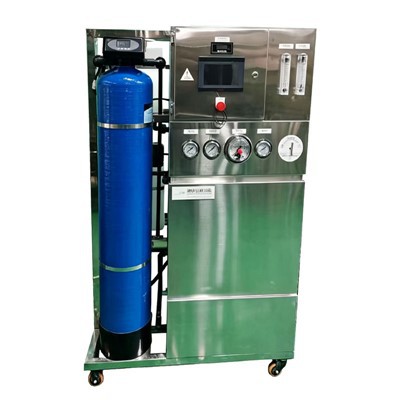
Understanding the Basics of Industrial RO Equipment
Before diving into the monitoring process, it’s essential to have a basic understanding of how industrial RO equipment works. Reverse osmosis is a water purification process that uses a semi – permeable membrane to remove ions, molecules, and larger particles from water. In an industrial setting, RO systems are used to treat large volumes of water for various applications, such as boiler feed water, food and beverage production, and pharmaceutical manufacturing.
The main components of an industrial RO system include a pre – treatment system, a high – pressure pump, the RO membrane, and a post – treatment system. The pre – treatment system removes large particles, sediment, and chlorine from the water to protect the RO membrane. The high – pressure pump forces the water through the RO membrane, where impurities are removed. The post – treatment system may adjust the pH, add minerals, or disinfect the treated water.
Key Performance Indicators (KPIs) to Monitor
1. Water Quality
- Conductivity: Conductivity is a measure of the ability of water to conduct an electrical current. It is directly related to the concentration of ions in the water. A significant increase in the conductivity of the RO permeate (treated water) may indicate membrane fouling, damage, or the need for membrane cleaning or replacement.
- Total Dissolved Solids (TDS): TDS refers to the total amount of inorganic and organic substances dissolved in water. Similar to conductivity, an increase in TDS in the permeate can signal problems with the RO membrane.
2. Flow Rates
- Feed Flow Rate: The feed flow rate is the amount of water entering the RO system. Monitoring the feed flow rate ensures that the system is receiving an adequate supply of water. A decrease in the feed flow rate may be due to clogged pre – filters or a malfunctioning pump.
- Permeate Flow Rate: The permeate flow rate is the amount of treated water produced by the RO system. A decline in the permeate flow rate can be caused by membrane fouling, low feed pressure, or a decrease in the water temperature.
- Concentrate Flow Rate: The concentrate flow rate is the amount of water that is rejected by the RO membrane and contains the concentrated impurities. Maintaining an appropriate concentrate flow rate is essential to prevent scaling and fouling on the membrane surface.
3. Pressure
- Feed Pressure: The feed pressure is the pressure at which water enters the RO system. Sufficient feed pressure is required to force water through the RO membrane. A decrease in feed pressure may result in reduced permeate flow and lower water quality.
- Differential Pressure: Differential pressure is the difference in pressure between the feed and concentrate sides of the RO system. An increase in differential pressure can indicate membrane fouling or blockage in the system.
4. Recovery Rate
The recovery rate is the percentage of feed water that is converted into permeate. It is calculated by dividing the permeate flow rate by the feed flow rate and multiplying by 100. A stable recovery rate is important for optimizing the efficiency of the RO system. Changes in the recovery rate can be caused by factors such as membrane fouling, feed water quality variations, or improper system operation.
Monitoring Methods
1. Regular Sampling and Analysis
- Water Sampling: Regularly collect water samples from the feed, permeate, and concentrate streams of the RO system. The frequency of sampling depends on the application and the water quality. For critical applications, daily or even more frequent sampling may be necessary.
- Laboratory Analysis: Send the water samples to a certified laboratory for analysis of conductivity, TDS, pH, and other relevant parameters. Laboratory analysis provides accurate and reliable results, but it may take some time to obtain the data.
2. In – Line Monitoring Instruments
- Conductivity Meters: Install conductivity meters in the feed and permeate lines to continuously monitor the conductivity of the water. Conductivity meters provide real – time data and can be used to detect sudden changes in water quality.
- Flow Meters: Use flow meters to measure the feed, permeate, and concentrate flow rates. There are different types of flow meters available, such as electromagnetic flow meters and ultrasonic flow meters.
- Pressure Gauges: Install pressure gauges at the inlet and outlet of the RO system to monitor the feed pressure and differential pressure. Pressure gauges are simple and cost – effective instruments that can provide valuable information about the system’s performance.
3. Data Logging and Automation
- Data Logging Systems: Use data logging systems to record the monitoring data over time. This allows you to analyze trends and identify potential problems before they cause significant damage to the RO system.
- Automation and Control Systems: Implement automation and control systems to adjust the operating parameters of the RO system based on the monitoring data. For example, the system can automatically increase the feed pressure if the permeate flow rate decreases or initiate a membrane cleaning cycle if the differential pressure increases.
Troubleshooting Based on Monitoring Results
1. High Conductivity or TDS in Permeate
- Possible Causes: Membrane fouling, membrane damage, improper system operation, or high feed water TDS.
- Solutions: Clean the membrane using the appropriate cleaning chemicals. If the membrane is damaged, replace it. Check the system’s operating parameters and ensure that they are within the recommended range. Consider pre – treating the feed water more effectively if the feed water TDS is too high.
2. Low Permeate Flow Rate
- Possible Causes: Membrane fouling, low feed pressure, clogged pre – filters, or a malfunctioning pump.
- Solutions: Clean or replace the pre – filters. Check the feed pressure and adjust the pump if necessary. If the membrane is fouled, clean it as per the manufacturer’s instructions.
3. High Differential Pressure
- Possible Causes: Membrane fouling or blockage in the system, such as a clogged brine channel spacer.
- Solutions: Perform a membrane cleaning procedure. If the problem persists, inspect the system for blockages and replace any damaged components.
Importance of Regular Maintenance
In addition to monitoring, regular maintenance of industrial RO equipment is essential to ensure its long – term performance. Maintenance tasks include replacing pre – filters, cleaning the membrane, lubricating the pump, and inspecting the system for leaks. By following a regular maintenance schedule, you can prevent many common problems and extend the lifespan of the RO system.
Conclusion
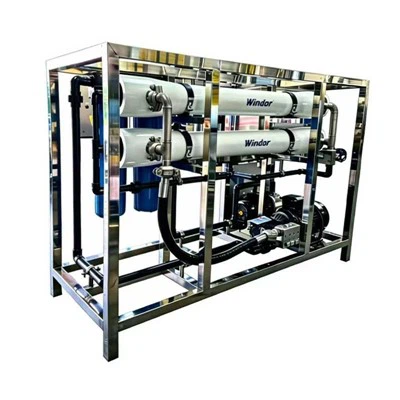
Monitoring the performance of industrial RO equipment is a continuous process that requires attention to detail and the use of appropriate monitoring tools. By regularly monitoring key performance indicators, such as water quality, flow rates, pressure, and recovery rate, you can detect and address potential problems early, optimize the efficiency of the RO system, and reduce operational costs.
SWRO & BWRO Equipment As a supplier of industrial RO equipment, we are committed to providing our customers with high – quality products and comprehensive support. If you are interested in purchasing industrial RO equipment or need assistance with monitoring and maintaining your existing system, we encourage you to contact us. Our team of experts will be happy to discuss your specific requirements and provide you with the best solutions.
References
- Cheryan, M. (1986). Ultrafiltration Handbook. Technomic Publishing Company.
- Koyuncu, I., Onen, S., & Kitis, M. (2005). Reverse osmosis membrane fouling caused by natural organic matter (NOM) and its control: A review. Desalination, 176(1 – 3), 1 – 20.
- Baker, R. W. (2004). Membrane Technology and Applications. Wiley.
Shandong Yanuo Environmental Protection Equipment Co., Ltd.
We’re well-known as one of the leading industrial ro equipment manufacturers and suppliers in China, featured by quality products and good price. Please rest assured to buy bulk industrial ro equipment made in China here from our factory. Customized orders are welcome.
Address: North Side of the Road, 1,000 Meters West of the Intersection of Fenghuangshan West Road and Provincial Highway S102, Wangfu Subdistrict, Qingzhou City, Weifang City, Shandong Province.
E-mail: ynhb.499973983@gmail.com
WebSite: https://www.zkyaruo.com/
