If you’ve ever walked a construction site, you’ve probably glanced at those big, temporary frames holding wet concrete in place until it hardens—those are formworks, and they’re way more important than most people give them credit for. As a formwork supplier, I get asked a ton of questions about them, and one I hear all the time is “What’s formwork efficiency ratio?” Most folks new to construction think it’s just some random number we pull out of thin air to make our products look good, but nah—it’s a real, practical metric that makes or breaks how fast, cheap, and smooth a job goes. Let me break this down like I would to a job foreman or a new project manager, no fancy jargon (I’ll save that for the specs, promise). Formwork
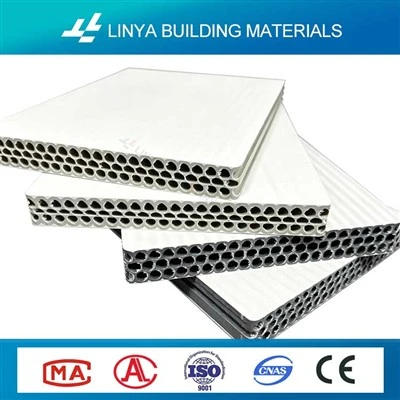
First, let’s get the basics straight. Formwork isn’t one-and-done. Some sets you build once for a small patio and tear down, but most big projects—high-rises, bridges, shopping malls—use the same panels over and over again. The efficiency ratio is all about how often you can reuse a set of formworks before they’re too beat up to use safely or accurately. Think of it like a truck: if you drive it 50k miles, it’s still good, but if you drive it 200k, you’re gonna need major work. Formwork works the exact same way.
Here’s the formula that every foreman and estimator on my team memorizes: Formwork Efficiency Ratio = Total number of concrete placements the formwork set makes ÷ Number of days (or hours, but most jobs use days) the set is in service. Wait, hold up—let me make that relatable. If I have a wall formwork set that I use for 10 different pours (so 10 placements) over 30 days, my ratio is 10 ÷ 30 = ~0.33. But if that same set works 20 pours in 30 days? Ratio jumps to ~0.67. That’s the difference between a job that wraps on time and one that drags on because you’re waiting for new formworks to show up.
Why does this matter so much? Let’s talk money first. Formworks are a huge chunk of a construction budget—like, up to 20% of the total cost for concrete work. If your ratio is low, that means you’re buying new formwork every couple of pours, or renting it (and paying rental fees per day, which adds up fast). A high ratio means you’re stretching that initial investment (whether you bought the set or rented it) way further. Last year, we had a client building a 12-story apartment complex who was using cheap, flimsy wood formworks from a big box supplier. Their ratio was like 0.1—they had to replace the entire wall set every 5 pours because the wood warped and split. They ended up spending 40% more on formwork than projected, plus lost two weeks of schedule waiting for deliveries. Switched to our modular steel formworks, which are built with reinforced frames and high-density plastic liners that don’t warp. Their ratio hit 0.58—they only had to do minor repairs once a month instead of buying new stuff. Saved them $120k and kept their project on track. That’s the kind of math that makes a project manager’s eyes light up.
But it’s not just cost. Safety and quality play into this too. If a formwork is beat up from being reused too much, it won’t hold concrete straight or level. You end up with uneven walls, bumpy slabs, or even worse—leaks that weaken the concrete. My uncle was a foreman on a highway bridge project a few years back; they were using a low-efficiency formwork set that twisted after 8 pours. A section of girder ended up being 2 inches off spec, which meant they had to chisel and re-pour it. Not only did that set them back a week, but OSHA almost flagged them for quality deviations. High-efficiency formworks, though, are built to hold their shape. Our systems have quick-adjust clamps and replaceable liners, so even after 50+ pours, the panel itself is still true. A ratio that’s consistent means consistent results—no surprises, no rework, no headaches.
Wait, let’s clarify something: not all efficiency ratios are calculated the same way. A lot of people I talk to mix up the number of reuses with the ratio. Yeah, if a formwork set does 50 reuses, that’s a big number, but if it took 150 days to get those 50 pours done (because of weather delays, job site layout, etc.), the ratio is lower than a set that does 50 pours in 75 days. That’s the key— it’s not just how many times you use it, but how fast you use it, safely and correctly. Weather is a huge factor here too. If it’s pouring rain, you can’t use formworks for a few days, so your days in service go up, and your ratio drops. That’s why our formworks are designed with quick assembly and take-down—we cut down the time each use takes, so even with weather delays, you can keep the ratio as high as possible.
Modular vs. custom formworks also plays a big role in efficiency. Custom formworks are made for one specific job—say, a curved facade on a unique building. You can’t reuse them for a square wall or another curve, so their efficiency ratio is basically 1 (one pour, total). That makes sense for one-off projects, but for standard multi-story builds, modular formworks win every time. Our steel modular sets can be adjusted to different heights and widths—you can add or remove panels on site in minutes, no special tools. A few months back, a client was building two adjacent parking garages, each 8 stories. They used the same modular set for both garages. First garage: 120 pours in 180 days (ratio ~0.66). Second garage: 120 pours in 120 days (ratio 1.0!). They reconfigured the panels between garages in a week, no extra cost, no downtime. That’s the kind of flexibility that cranks up your ratio.
Maintenance is another thing we harp on with our clients, because it directly impacts efficiency. If you don’t clean your formworks after each pour, concrete residue builds up, which makes them harder to assemble next time—takes longer to line up panels, clamps don’t seat right, you risk leaks. Or if you don’t tighten the bolts or replace a worn liner, the panel warps after a few uses, cutting down on how many times you can reuse it. We give every client a free maintenance guide when they rent or buy our formworks—like, “Pressure wash within 24 hours of stripping, don’t use metal scrapers (they scratch liners), store panels flat on wooden pallets, not the dirt.” One of our regulars does exactly that—their wall formworks get 60+ pours over 10 months, ratio holding steady at 0.72. Another client who skipped the maintenance guide had their ratio drop by 40% after 20 pours because they didn’t clean residue off the panels, so each assembly took twice as long. It’s simple stuff, but it makes a huge difference.
Let’s talk about what a “good” efficiency ratio actually is, because that’s the question everyone really wants to ask. It depends on the project type, for sure. For small, one-off residential jobs, a ratio of 0.2 to 0.3 is normal—you’re using formworks once or twice, maybe three times if it’s a patio and a walkway. For mid-rise commercial builds, 0.4 to 0.6 is solid. For large-scale, repetitive projects like parking garages or straight highways, you’re looking at 0.6 to 0.9. And with our high-tensile steel modular systems, we’ve had clients hit 1.0 on short, tight projects—meaning they’re reusing the set once a month, no delays, no issues. That’s the sweet spot.
I know a lot of suppliers will try to sell you on super high-end formworks that cost a fortune, saying they get ratios way higher, but it’s not just about the number—you have to balance upfront cost with long-term savings. Our formworks are priced competitively, not like luxury items, because we design them for real job sites, not just showroom demos. We test every set for 100+ pours in our warehouse before sending them out, so you know they’re built to last.
At the end of the day, formwork efficiency ratio isn’t some fancy industry buzzword. It’s a tool that helps you plan, budget, and avoid mistakes. When I’m out on a job site with a new client, the first thing I ask is “What’s your current efficiency ratio, and what’s your timeline?” Because that tells me exactly where they’re struggling, and how our formworks can fix it. If you’re tired of overspending on formworks, dealing with delays, or reworking concrete because of wonky panels, let’s chat. We can walk through your project specs, run the numbers together, and figure out how to get your efficiency ratio where it needs to be—no hidden fees, no jargon, just real solutions that get the job done right.
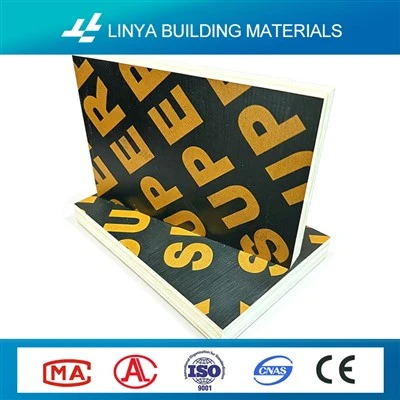
If you’re ready to optimize your formwork process and boost your project’s efficiency, reach out to our team to discuss your specific needs. We can provide tailored recommendations, breakdowns of how our systems will improve your ratio, and support throughout your project. Don’t let inefficient formwork hold your next build back—let’s make it smooth, cost-effective, and on time.
Film Faced Formwork References:
- Construction Industry Institute. (2021). Formwork Efficiency Metrics for Concrete Construction Projects. University of Texas at Austin.
- American Society of Concrete Contractors. (2022). Modular Formwork Best Practices and Performance Benchmarks. ASC Press.
- National Ready Mixed Concrete Association. (2020). Cost Optimization Strategies for Formwork in Mid-Rise Construction. NRMCA Technical Report.
Shenzhen Linya Building Materials Co., Ltd.
We are one of the most professional formwork manufacturers and suppliers in China, also support customized service. Welcome to buy bulk high quality formwork in stock here from our factory. If you have any enquiry about free sample, please feel free to email us.
Address: Bantian International Center, No.5 Huancheng South Road, Ma’antang Community, Bantian Street, Longgang District, Shenzhen
E-mail: linya@formworksteelprop.com
WebSite: https://www.linyabuildingmaterials.com/
