If you’ve ever worked in process industries—oil and gas, water treatment, chemical manufacturing, or even food and beverage processing—you know butterfly valves are workhorses. They’re lightweight, compact, and designed to open and close lines quickly, which makes them go-to for thousands of applications. But a question I get at least twice a week from spec engineers, plant managers, and even small fabrication shop owners is: “What’s the maximum pressure a butterfly valve can handle?” The answer isn’t one-size-fits-all. It depends on a dozen factors, and as someone who’s spent the last 12 years selling and supporting butterfly valves, I’ve seen firsthand how getting that number wrong can shut down a plant, cost thousands in repairs, and even create safety risks. Let me break this down like I do when I’m walking a new client through our catalog, no jargon unless we need it. Butterfly Valves

First, let’s start with the basics. A butterfly valve works by rotating a disc (usually 90 degrees) inside the pipe to control flow. The disc is mounted on a stem that connects to an actuator, and when it’s fully closed, the disc presses against the valve’s seat to seal the line. The pressure rating of a butterfly valve isn’t a random number stamped on a spec sheet—it’s calculated based on how much force the valve, its seat, body, disc, and stem can withstand before failing or leaking. Most people assume “max pressure” is just a single number, but that’s not true. It changes based on the valve’s size, the material it’s made from, the type of seat it has, whether it’s manual or actuated, and even the temperature of the fluid flowing through the pipe.
Let’s start with valve size, because that’s the first thing anyone looks at. A 2-inch butterfly valve isn’t rated the same as a 24-inch one. Think of it like a door: a small closet door can handle a lot of force, but a 10-foot barn door will bend or break if you push it too hard. The larger the valve, the bigger the disc and body, so the more force the fluid exerts on the closed disc. A typical small manual butterfly valve (say, 2 to 6 inches) for low-pressure water might be rated for 150 psi, which is standard for plumbing. But a 30-inch butterfly valve for a high-pressure water line or oil pipeline? That same valve size would be rated for 300 psi, 600 psi, even higher, depending on design. I had a client last year who ordered a 36-inch butterfly valve for a municipal water main upgrade. They thought all valves of that size were 150 psi, but when we looked at their specs, their system ran at 250 psi. If they’d installed the wrong valve, the seat would have blown out within months, causing a city-wide water outage. That’s why I always ask for the system’s operating pressure, fluid type, and pipe size before I even send a quote.
Next, material is huge. What the valve is made of directly impacts how much pressure it can handle, and also what fluids it can work with. The most common valve body materials are cast iron, ductile iron, carbon steel, and stainless steel. Cast iron valves are cheap, but they’re brittle. A cast iron butterfly valve might be rated for 150 psi, but if you run it at even 200 psi, it could crack or snap. Ductile iron is stronger—think of it as cast iron with extra tensile strength. A ductile iron valve can handle up to 300 psi, and in some cases even 400 psi for smaller sizes. Carbon steel is for high-temperature, high-pressure applications, like oil and gas lines that run at 500 degrees Fahrenheit and 1,000 psi. Carbon steel butterfly valves are way more durable, but they’re also more expensive. Stainless steel is for corrosive fluids, like chemicals or food-grade products. A 316 stainless steel butterfly valve, for example, can handle up to 600 psi for small sizes, but you have to pair it with a seat that’s compatible with the fluid—we’ll get to seats in a minute.
Then there’s the seat type, which is probably the most overlooked factor when it comes to pressure ratings. The seat is the rubber or polymer ring that sits inside the valve body; when the disc closes, it presses against the seat to create a seal. Seats aren’t one-size-fits-all, and their pressure ratings are tied directly to their material. The most common seats are EPDM, Buna-N (nitrile), PTFE, and metal. EPDM seats are for water, steam, and mild chemicals. An EPDM seat might be rated for 150 to 200 psi, but if you run it at higher pressure, the seal will leak, even if the valve body is built for more. Buna-N is for oil and fuel; it can handle up to 300 psi, but it breaks down if you expose it to strong acids or high heat. PTFE seats are for corrosive chemicals and food processing. PTFE can handle pressures up to 400 psi, but it’s more expensive and can crack at very low temperatures. Metal seats are for the highest pressure and highest temperature applications, like gas pipelines or refineries. Metal seats are made of stainless steel or other alloys, and they can handle pressures up to 1,500 psi or more. But here’s the catch: metal seats don’t create a bubble-tight seal like rubber or PTFE seats at lower pressures, so they’re only used when you need to handle extreme conditions. I learned that the hard way a few years ago when a food processing client ordered a metal-seated butterfly valve for a low-pressure beer line. They called me a month later saying the valve was leaking, and I had to explain that metal seats are designed for high pressure, not for the 50 psi of beer in their line. We swapped it for an EPDM-seated valve, and they haven’t had an issue since.
Temperature also plays a big role in pressure ratings, and it’s something even experienced engineers sometimes forget. A valve’s pressure rating is only valid at a specific temperature, usually room temperature (around 70 degrees Fahrenheit). If you’re working with hot fluid, that pressure rating drops. For example, a ductile iron butterfly valve rated for 300 psi at room temperature might only be rated for 200 psi at 300 degrees Fahrenheit, and just 100 psi at 500 degrees Fahrenheit. That’s because metals expand when heated, which changes the way the valve fits together, and seats break down at high temperatures. I had a client in the power industry who was installing butterfly valves on a steam line. They used a valve rated for 150 psi at room temp, not realizing the steam ran at 450 degrees Fahrenheit. The valve leaked so bad they had to shut down their unit for emergency repairs. We replaced it with a carbon steel valve rated for 200 psi at 500 degrees, and that’s worked for three years now.
So, what’s the actual maximum pressure a butterfly valve can handle? Let’s be clear: there’s no single number. For most standard applications, like water treatment or mild process lines, you’re looking at 150 to 300 psi. For higher-pressure industrial lines, oil and gas, or mining applications, that number goes up to 600 psi, and for extreme high-pressure or high-temperature environments, like refineries or pipelines, butterfly valves can handle up to 1,500 psi, and in some custom cases even higher. But that number isn’t set in stone—it’s dependent on all the factors I mentioned: size, material, seat type, temperature, and even the actuator you use.
Speaking of actuators, I can’t forget about those. If you’re using a manual butterfly valve, the maximum pressure is limited by how much force a person can apply to turn the stem. Most manual butterfly valves are rated for 150 to 300 psi, because that’s the limit of what a person can turn with a handwheel. If you need higher pressure, you have to use an actuator—pneumatic, electric, or hydraulic. A pneumatic actuator can apply hundreds of pounds of force, so a butterfly valve paired with a good pneumatic actuator can handle 600 psi, 800 psi, even higher. Electric and hydraulic actuators are even more powerful, so they’re used for the highest pressure applications. But you have to make sure the actuator is sized correctly for the valve and the pressure; if you use an undersized actuator, you won’t be able to close the valve against high pressure, which will cause leaks or damage.
Another thing to consider is pressure class vs. working pressure. A lot of people mix these up. Pressure class is the rating stamped on the valve, usually in psi or bar, that tells you the maximum pressure the valve can handle at its rated temperature. Working pressure is the actual pressure you run the system at. I always tell clients to size their valve so their working pressure is at least 20% lower than the pressure class rating. That gives you a safety margin for spikes in pressure—like when a pump turns on, or a valve upstream closes suddenly. Pressure spikes are one of the most common causes of valve failure, and they’re completely avoidable if you build in that margin.
Now, I know this sounds like a lot to take in, and if you’re not an engineer, all these numbers and terms can be overwhelming. That’s why I’m here. Over the years, I’ve worked with engineers, plant managers, small business owners, and even hobbyists, and I’ve learned that the best way to figure out the right butterfly valve for your application is to ask a few simple questions: What size is your pipe? What fluid are you moving? What’s your system’s operating pressure, and do you have pressure spikes? What’s the temperature of the fluid? Do you need a manual valve, or do you need it actuated for automatic control?
I’ve spent 12 years in this business, and I can tell you that there’s no one-size-fits-all answer to the maximum pressure a butterfly valve can handle, but there is a right answer for your specific application. If you get that wrong, you’re looking at downtime, repair costs, and even safety risks. I’ve seen too many clients cut corners on valve specs and regret it later. When I send a quote, I don’t just send a price and a part number—I send the full spec sheet, with pressure ratings, material info, and seat compatibility, and I walk through all the factors to make sure it’s the right valve for their job.
At the end of the day, butterfly valves are one of the most reliable, cost-effective valves on the market, but only if you size and rate them correctly. If you’re not sure what maximum pressure your application needs, or if you’re looking to replace old, failing valves, I’m here to help. I’ve got a warehouse full of butterfly valves in all sizes, materials, and pressure ratings, and I can walk you through every step of finding the right one for your needs. Don’t guess on valve specs—reach out, and we can make sure you get a valve that will perform reliably for years, without the risk of leaks or failure.
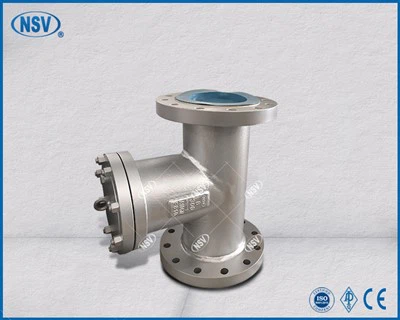
If you have questions about pressure ratings, need help sizing a valve, or want to discuss your next project, feel free to connect with our team to talk through your needs and find the perfect butterfly valve for your application.
Al-Bronze Alloy Valves References:
- Valve Manufacturers Association (VMA). "Butterfly Valve Design and Pressure Ratings." 2022.
- American Petroleum Institute (API). "Specification for Butterfly Valves for Petroleum and Natural Gas Industries." API 609, 2021.
- Hydraulic Institute. "Centrifugal Pump and System Pressure Surge Considerations." 2020.
- Material Properties Council. "Tensile Strength and Temperature Effects on Valve Body Materials." 2019.
- Food and Drug Administration (FDA). "Guidance for Food-Grade Valve Materials and Compatibility." 2021.
NSV Valve Corporation
NSV Valve Corporation is one of the most professional butterfly valves manufacturers and suppliers in China, featured by quality products and good service. Please rest assured to buy butterfly valves made in China here from our factory.
Address: Puyi Road,Sanqiao Industrial Zone, Oubei Street, Yongjia County,Zhejiang,China
E-mail: info@nsvvalve.com
WebSite: https://www.nsvvalves.com/
