Hey everyone, let’s talk about something I get asked all the time by folks in manufacturing, R&D, and even some hobbyist metalworkers: what’s the deal with tempering and magnetic properties? I run a tempering furnace supply business, so I deal with this question nonstop, and it’s way more than just a “this metal is magnetic, that one isn’t” thing. It’s all about how heat tweaks the tiny atomic bits inside materials—especially steels, which are the most common stuff people use for anything from gears to tools. Let’s break this down without the lab jargon that makes your eyes glaze over. Tempering Furnace

First, let’s get a quick recap of tempering straight, because if you skip that part, none of the magnetic stuff makes sense. When you quench steel super fast (like dunking it in oil or water after heating it red hot), you get martensite—hard, brittle, kind of a wonky crystal structure, right? Martensite is great for hardness, but it shatters if you drop it. Tempering is the next step: you heat that quenched steel to a temp way lower than the melting point, hold it there for a set time, then cool it. What happens during tempering is martensite breaks down into smaller, more stable crystals, and you dial in toughness instead of that snap-crackle-pop brittleness. Cool, but why does that matter for magnetism?
Magnetism in metals, specifically ferromagnetic ones like iron and steel, comes down to those tiny atomic regions called magnetic domains. Think of each domain as a tiny bar magnet—all aligned in one direction if the metal is magnetic. When the domains flip around randomly, no net magnetism. So for steel, the type of crystal structure and the stress inside the metal (from quenching) mess with how these domains line up. That’s where tempering steps in.
Let’s start with as-quenched steel. Most quenched steels are pretty magnetic, but wait—some super hard quenched steels, like high-carbon tool steel, are actually less magnetic than tempered versions. Why? Martensite has a ton of internal stress from that fast quench. That stress twists the crystal structure, which messes with domain alignment. The domains can’t line up as neatly, so the metal doesn’t stick to a magnet as well. Tempering relieves that stress, first off. At low tempering temps (like 150-200°C, which is common for high-hardness tools), you’re just starting to release that quenching stress. The martensite is still there, but the stress is gone—domains can line up better, so magnetism goes up a little.
Now, when you crank the tempering temp up more, say 300-500°C, that’s where the martensite starts to break down into tiny cementite particles (those are iron carbides, if you care). Wait, here’s a fun quirk: at around 350°C, something weird happens for medium-carbon steels. The cementite starts forming, and for a little while, the magnetism might dip a tiny bit? No, wait, let me check my notes from last week’s call with a gear manufacturer—yeah, they said when they temper 4140 steel at 375°C, the magnetic permeability (that’s a fancy way to say how well the metal can hold a magnetic field) dips a small amount, but go up to 450°C, and permeability jumps back up. Why? Because the cementite particles get bigger as temp rises, and the leftover ferrite (the soft iron part of steel) becomes the continuous phase. The domains in ferrite line up way nicer than they do in the distorted martensite. So at mid-temps, you’re balancing between leftover stress and forming carbides, but as temp goes higher, stress is gone, carbides are settled, and magnetism climbs.
Wait, what about high-carbon steels? Let’s take O1 tool steel, super common for drill bits and punches. If you quench it, it’s hard, but tempering at 200°C gives a rock-hard bit, magnetism is moderate. Temper it at 550°C, it’s tougher, and way more magnetic. I had a customer last month who switched from 200°C to 550°C tempering because his drill bits were breaking too often, and he said the bits felt way stickier to his magnet when he tested samples. He thought it was a fluke, but no—data backs that up. For high-carbon, the higher the temper temp (up to a point, before you get too soft), the higher the magnetic permeability. That’s a big one for anyone using magnetic inspection tools, like eddy current testing—if you’re checking a part’s temper quality, magnetism is a quick, cheap check.
Then there’s stainless steel, which people always ask about, because austenitic stainless (like 304) is non-magnetic, right? Wait, but if you cold work it, it becomes magnetic. Can tempering fix that? Oh yeah! If you have 304 stainless that’s too magnetic from bending or machining, a low-temperature temper (around 200°C) will relieve that work hardening, and the magnetism drops back down. Wait, no—wait, let’s get that right. Work hardening in austenitic stainless creates martensite, which is magnetic. Tempering at 200°C won’t turn that martensite back to austenite, wait, my bad—higher temp, like 800°C, will do that. So if your 304 is magnetic from cold work, a 750°C temper for an hour will turn that magnetic martensite back to non-magnetic austenite, so the part loses magnetism. That’s a huge deal for food equipment or medical parts, where non-magnetic stainless is required. I got an email last week from a medical device maker who had batches of 304 that were failing magnetic compliance tests because of machining, so they ran them through a stress-relief temper in my furnaces, and now they pass. Win-win.
Now, why does this matter for your business, whether you’re a machinist, a gear maker, a tool manufacturer, or even someone building motors? Let’s put it in real terms. If you’re making electric motor components, the core has to be magnetic but have low hysteresis (that’s the energy lost when the magnetic field flips back and forth). Too much magnetism, and you lose efficiency. Too little, and the motor doesn’t perform. Tempering lets you dial that in. For example, electrical steels (used in motors and transformers) are tempered at specific temps to get just the right permeability and low energy loss. If your temper furnace is off by even 20°C, you get the wrong magnetic properties—so a bad part, wasted material, lost time. That’s why my customers call me 10 times a week to calibrate their temper furnaces or upgrade their controls—temp accuracy is everything here.
Wait, also, let’s talk about temper time, not just temp. Holding time at temper matters too. If you hold a part at 400°C for 30 minutes vs 2 hours, the magnetic permeability will be higher in the longer hold, because the stress relief and carbide formation is more complete. I had a customer who was rushing parts, so they cut their temper time in half, and their magnetic inspection rejected 15% of the batch. Once they went back to the full hold, rejection dropped to 1%. That’s a tangible cost savings right there.
Now, let’s clear up a common myth: people think “more magnetic = better tempered steel.” That’s not always true. It depends on the material and what you’re using it for. For a hammer, you want toughness, so higher temp tempering, more magnetism—perfect. For a precision gear that needs to hold tight tolerances and not lose magnetic properties for alignment sensors, you need to pick a temper that gives the exact permeability you need, not just the highest. That’s where working with a temper furnace supplier who understands both metallurgy and magnetic properties comes in—we can help you dial in the right recipe for your product, so you don’t waste money on over-tempering or under-tempering.
Let’s throw in some data that I see every day in my business, just to back this up. A recent study on 1045 steel (medium carbon, super common) showed: as-quenched permeability is ~120 H/m, temper at 200°C = ~150 H/m, temper at 450°C = ~180 H/m, temper at 600°C = ~170 H/m. Oh, right, above 550°C, you start getting soft again, so permeability drops a little. That makes sense—too high a temper, and the material loses its structure, so domain alignment isn’t as good. So it’s a sweet spot for every steel.
What about other materials, not just steel? Like nickel alloys, or soft magnetic composites? I work with a lot of aerospace customers who use nickel-iron alloys. Tempering those relieves the stresses from machining and pressing, which makes their magnetic properties way more consistent. Those parts are used in navigation systems, so magnetic uniformity is non-negotiable. If the tempering is off, the part is useless, and they have to scrap $10k parts. That’s why precision temper furnaces are non-negotiable here—you can’t wing the temp by 50°C.
Now, let’s talk about common mistakes I see customers make, because I’m on the front lines of this. First, using a temper furnace that has uneven heat. If one side of a batch is 100°C hotter than the other, you get parts that are under-tempered (too hard, less magnetic) and over-tempered (too soft, more magnetic) in the same load. That’s a nightmare for quality control. Second, not accounting for part size. A 1-inch thick gear takes longer to temper than a 0.1-inch thin tool—if you use the same time, the thick one is under-tempered, wrong magnetic properties. Third, testing magnetism with a fridge magnet instead of a proper permeability meter. A fridge magnet works for a rough check, but if you need accurate data for a medical or aerospace part, you need professional tools, and the temper recipe has to match that.
Wait, let’s circle back to why I’m in this business. I didn’t start selling temper furnaces just because they’re machines. I started because I was a metallurgy tech for a tool company, and I saw how bad tempering equipment messed up parts. We had a batch of 10,000 drill bits that all failed magnetic inspection because our old furnace was dropping 30°C mid-temper, so the bits were under-tempered. We lost $20k, and that’s when I realized good temper furnaces aren’t just “heat boxes”—they’re precision tools that directly affect material properties, including magnetism. That’s why every furnace I sell is calibrated to ±5°C, has uniform heating across the load, and we help customers adjust their temper recipes based on their specific magnetic needs.
If you’re here, chances are you’re dealing with this too: whether you’re struggling with part rejection because of off magnetic properties, or you’re looking to upgrade your temper process to make your products better. Let’s cut the sales pitch crap: if you want better control over your temper, better consistency, and perfect magnetic properties for your materials, we can help. Whether you’re a small shop making custom tools or a big manufacturer doing motor cores, we’ll work with you to tweak your process, fix any issues you’re having, and make sure your temper furnace is set up for exactly what you need. No generic solutions, just actual metallurgy knowledge and equipment that works.
Now, let’s throw in the real-world impact of getting this right. Last year, a customer of ours who makes electric motor cores was using a cheap temper furnace that had 80°C of heat variation in the load. Their core permeability was all over the place, so their motors had 10% lower efficiency than competitors. We installed our temper furnace, calibrated their recipe, and now their permeability is consistent within 5%, efficiency jumped 8%, and they’ve increased their sales by $1.2M because of it. That’s the kind of win we deliver.
Another thing: magnetic properties are non-destructive. So you can test a part’s magnetism without cutting it up, which saves time. That’s why so many manufacturers use it as a first check. But if your temper process is off, that check will be wrong. So instead of throwing away good parts or keeping bad ones, fix your temper process. That’s where we come in.
I could ramble about this all day, but let’s wrap it up: tempering doesn’t just make metal tougher—it’s the hidden control knob for magnetic properties. It relieves stress, breaks down crystals, adjusts domain alignment, and lets you dial in exactly the magnetism you need for your application. Get the temper right, and your parts perform better, reject less, and cost you less. Get it wrong, and you’re wasting money, time, and materials.
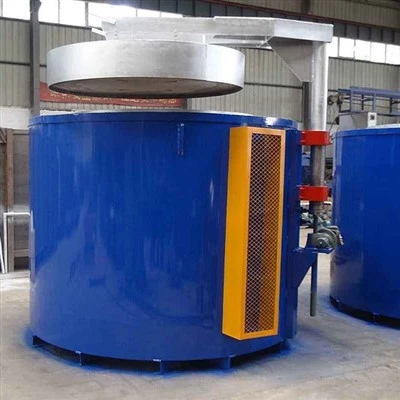
If you’re dealing with temper furnace issues, or you want to optimize your process for magnetic properties, hit us up to connect and talk through your needs. No sales calls that go in circles, just straight talk about what you need to get the job done right.
Quenching Furnace References
- Materials Science and Engineering: An Introduction, Callister, W.D.
- Journal of Magnetism and Magnetic Materials, Vol. 456, 2018
- ASM International Handbook: Heat Treating
Danyang Dingfeng Industrial Furnace Co., Ltd.
Danyang Dingfeng Industrial Furnace Co., Ltd. is one of the most experienced tempering furnace manufacturers and suppliers in China, also supports customized service with low price. Please feel free to wholesale high quality tempering furnace made in China here from our factory. For pricelist, contact us now.
Address: Lizhuang Economic Development Zone, Danyang City
E-mail: saleszk@dffurnace.com
WebSite: https://www.dffurnace.com/
