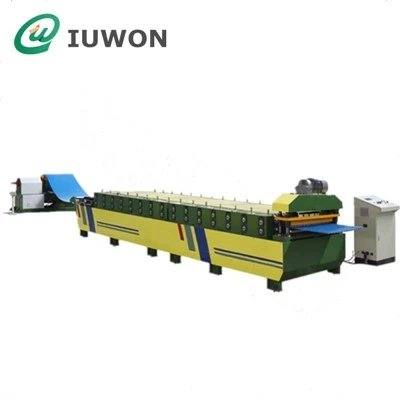
As a supplier of Wall & Roof Roll Forming Machines, I’ve encountered numerous inquiries from clients regarding the vibration level of these machines during operation. This is a crucial aspect, as excessive vibration can not only affect the quality of the formed products but also lead to mechanical wear and potential safety hazards. In this blog, I’ll delve into the factors influencing the vibration level, how to measure it, and ways to optimize it for better performance. Wall & Roof Roll Forming Machine
Factors Affecting the Vibration Level
The vibration of a Wall & Roof Roll Forming Machine during operation is influenced by several factors. First and foremost, the design and manufacturing quality of the machine play a significant role. A well – designed machine with precise machining and assembly will generally have lower vibration levels. For instance, if the rollers are not perfectly aligned during the manufacturing process, it can cause uneven forces on the metal strip being formed, leading to increased vibration.
The speed of the machine is another critical factor. As the machine runs at higher speeds, the kinetic energy involved increases, which can amplify the vibration. Operators need to find a balance between production efficiency and vibration control. If the machine is running too fast for the material and the forming process, it may generate excessive vibration, resulting in poor – quality products.
The type and quality of the material being processed also affect the vibration. Different metals have different physical properties, such as density, hardness, and ductility. For example, a harder metal may require more force to form, which can cause more significant vibrations compared to a softer metal. Additionally, if the material has impurities or inconsistent thickness, it can lead to uneven stress distribution during the forming process, increasing the vibration level.
The condition of the machine’s components, such as bearings, gears, and belts, is also vital. Worn – out or damaged components can introduce additional vibrations. For example, a bearing with excessive play can cause the shaft to wobble, leading to increased vibration throughout the machine. Regular maintenance and inspection of these components are essential to keep the vibration level in check.
Measuring the Vibration Level
To effectively manage and optimize the vibration level of a Wall & Roof Roll Forming Machine, accurate measurement is necessary. There are several methods and tools available for this purpose.
One of the most common tools is a vibration sensor or accelerometer. These sensors can be attached to various parts of the machine, such as the frame, rollers, or motor, to measure the acceleration and frequency of the vibrations. The data collected by the sensors can then be analyzed using specialized software. The software can generate vibration spectra, which show the different frequencies and amplitudes of the vibrations. By analyzing these spectra, operators can identify the source of the vibrations. For example, a high – frequency vibration may indicate a problem with a rotating component, while a low – frequency vibration could be related to the overall instability of the machine.
Another method is to use a stroboscope. A stroboscope emits short, intense flashes of light at a controlled frequency. By adjusting the flash frequency to match the rotational speed of a component, the component appears to be stationary. This allows operators to visually inspect the component for any signs of misalignment or damage that may be causing the vibration.
In addition to these instrumental methods, experienced operators can also detect abnormal vibrations through tactile and auditory feedback. They can feel the vibration by placing their hands on the machine’s frame, and they can listen for unusual noises, such as rattling or humming, which may indicate excessive vibration or mechanical problems.
Optimizing the Vibration Level
Once the vibration level has been measured and the sources of the vibration have been identified, steps can be taken to optimize the vibration level.
If the vibration is due to misalignment of the rollers or other components, realignment is necessary. This may involve adjusting the position of the rollers using precision tools to ensure that they are parallel and in the correct position relative to each other. This process requires careful calibration and measurement to achieve the best results.
To reduce vibration caused by high – speed operation, the machine’s speed can be adjusted. Operators can use the machine’s control system to gradually decrease the speed and observe the change in the vibration level. This may require some trial and error to find the optimal speed that balances production efficiency and vibration control.
Upgrading or replacing worn – out components is another effective way to reduce vibration. For example, if the bearings are worn, replacing them with high – quality bearings can significantly reduce the vibration caused by the rotation of the shafts. Similarly, replacing damaged belts or gears can improve the overall smoothness of the machine’s operation.
Using vibration – damping materials can also help. These materials can be placed between the machine and its foundation or on the machine’s frame to absorb and dissipate the vibration energy. For example, rubber pads or springs can be used to isolate the machine from the floor, reducing the transmission of vibrations to the surroundings.
Importance of Controlling Vibration
Controlling the vibration level of a Wall & Roof Roll Forming Machine is of utmost importance for several reasons.
From a product – quality perspective, excessive vibration can cause misalignment and deformation of the formed products. For example, if the machine is vibrating too much during the roof panel forming process, the panels may not have the correct shape or dimensions, which can affect their installation and performance. By keeping the vibration level in check, we can ensure that the products meet the required quality standards.
In terms of machine durability, high vibration levels can lead to increased wear and tear on the machine’s components. This can result in frequent breakdowns and a shorter lifespan of the machine. Regularly monitoring and optimizing the vibration level can help extend the machine’s service life and reduce maintenance costs.
Safety is also a major concern. Excessive vibration can cause loose parts to fall off the machine or even lead to structural failures. This poses a significant risk to the operators and other workers in the vicinity. By controlling the vibration, we can create a safer working environment.
Conclusion

Understanding and controlling the vibration level of Wall & Roof Roll Forming Machines during operation is essential for ensuring product quality, machine durability, and operator safety. As a supplier, we are committed to providing our clients with high – quality machines and technical support to help them manage the vibration effectively.
Rolling Shutter Machine If you are in the market for a Wall & Roof Roll Forming Machine or need further advice on vibration control, please feel free to reach out to us for a detailed discussion. Our team of experts is ready to assist you in finding the best solution for your specific requirements.
References
- "Machinery Vibration and Monitoring" by Peter R. Dyke
- "Roll Forming Technology Handbook" by George E. Dieter
Hanghzou IUWON Technology Co., Ltd.
Hanghzou IUWON Technology Co., Ltd. is one of the most professional wall & roof roll forming machine manufacturers and suppliers in China. Please feel free to buy high quality wall & roof roll forming machine made in China here from our factory. For price consultation, contact us.
Address: No.755, Xintangtou Village, Xinjie Street, Xiaoshan District, Hangzhou, Zhejiang
E-mail: sales@iuwon.com
WebSite: https://www.iuwonforming.com/
