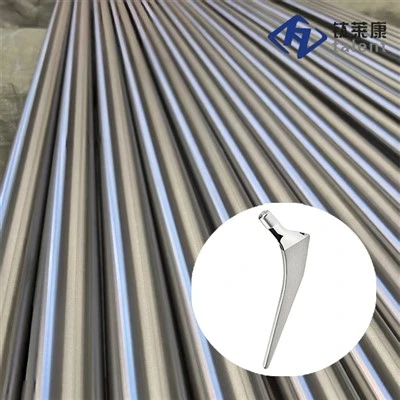
As a seasoned supplier of titanium bars, I’m often asked about the inspection methods for these remarkable materials. Titanium bars are renowned for their exceptional strength, corrosion resistance, and lightweight properties, making them a popular choice in various industries, including aerospace, medical, and automotive. Ensuring the quality of titanium bars is crucial to meet the stringent requirements of these applications. In this blog, I’ll delve into the key inspection methods we use to guarantee the integrity and performance of our titanium bars. Titanium Bars
Visual Inspection
Visual inspection is the most basic yet essential step in evaluating the quality of titanium bars. It involves a thorough examination of the bar’s surface for any visible defects, such as cracks, scratches, pits, or inclusions. These defects can significantly affect the mechanical properties of the bar and may lead to premature failure.
During visual inspection, we use high-intensity lighting and magnifying glasses to detect even the smallest imperfections. Our experienced inspectors carefully examine the entire surface of the bar, paying close attention to areas where defects are more likely to occur, such as the ends and edges. Any bars with visible defects are immediately removed from the production line to prevent them from being shipped to our customers.
Dimensional Inspection
Dimensional inspection is another critical aspect of quality control for titanium bars. It ensures that the bars meet the specified dimensions and tolerances, which are crucial for proper fit and function in the intended application.
We use a variety of measuring tools, such as calipers, micrometers, and gauges, to accurately measure the diameter, length, straightness, and roundness of the bars. These measurements are compared against the customer’s specifications and industry standards to ensure compliance. Any bars that fall outside the specified tolerances are rejected to maintain the high quality of our products.
Chemical Analysis
Chemical analysis is essential to determine the chemical composition of the titanium bars and ensure that they meet the required standards. The chemical composition of titanium bars can significantly affect their mechanical properties, corrosion resistance, and weldability.
We use advanced analytical techniques, such as spectrometry and wet chemical analysis, to accurately determine the elemental composition of the bars. These methods can detect even trace amounts of impurities and ensure that the bars contain the correct proportions of titanium and other alloying elements. Any bars with an incorrect chemical composition are rejected to prevent them from being used in critical applications.
Mechanical Testing
Mechanical testing is used to evaluate the mechanical properties of the titanium bars, such as tensile strength, yield strength, elongation, and hardness. These properties are crucial for determining the suitability of the bars for the intended application.
We perform a variety of mechanical tests, including tensile tests, compression tests, and hardness tests, to assess the mechanical properties of the bars. These tests are conducted in accordance with industry standards and are carefully monitored to ensure accurate and reliable results. Any bars that fail to meet the specified mechanical properties are rejected to ensure the safety and performance of our products.
Non-Destructive Testing (NDT)
Non-destructive testing (NDT) is a group of inspection techniques that can detect internal defects in the titanium bars without causing any damage to the material. These techniques are particularly useful for detecting defects that are not visible on the surface, such as internal cracks, porosity, or inclusions.
We use a variety of NDT methods, including ultrasonic testing, magnetic particle testing, and eddy current testing, to inspect the internal integrity of the bars. These methods are highly sensitive and can detect even the smallest defects, ensuring the quality and reliability of our products. Any bars with internal defects detected by NDT are promptly removed from the production line to prevent them from being shipped to our customers.
Ultrasonic Testing
Ultrasonic testing is one of the most commonly used NDT methods for inspecting titanium bars. It involves the use of high-frequency sound waves to detect internal defects in the material. The sound waves are transmitted into the bar, and any defects in the material will cause the sound waves to reflect back to the surface, where they can be detected by a transducer.
Ultrasonic testing is a highly sensitive method that can detect even small internal defects, such as cracks or porosity. It is also a non-destructive method, which means that the bars can be inspected without causing any damage to the material. This makes it an ideal method for inspecting titanium bars, which are often used in critical applications where the integrity of the material is essential.
Magnetic Particle Testing
Magnetic particle testing is another NDT method that is commonly used to inspect titanium bars. It involves the use of a magnetic field and magnetic particles to detect surface and near-surface defects in the material. The magnetic field is applied to the bar, and any defects in the material will cause the magnetic field to distort, attracting the magnetic particles to the defect.
Magnetic particle testing is a highly sensitive method that can detect even small surface and near-surface defects, such as cracks or inclusions. It is also a relatively quick and easy method to perform, making it a popular choice for inspecting titanium bars. However, it is only suitable for detecting defects in ferromagnetic materials, which means that it cannot be used to inspect non-ferromagnetic materials, such as titanium.
Eddy Current Testing
Eddy current testing is a non-destructive testing method that uses electromagnetic induction to detect surface and near-surface defects in the titanium bars. It involves the use of a coil that is placed near the surface of the bar, and an alternating current is passed through the coil, creating an electromagnetic field. Any defects in the material will cause the electromagnetic field to distort, which can be detected by a sensor.
Eddy current testing is a highly sensitive method that can detect even small surface and near-surface defects, such as cracks or inclusions. It is also a non-contact method, which means that the bars can be inspected without causing any damage to the material. This makes it an ideal method for inspecting titanium bars, which are often used in critical applications where the integrity of the material is essential.
Conclusion
As a supplier of titanium bars, we understand the importance of ensuring the quality and reliability of our products. That’s why we use a comprehensive range of inspection methods to evaluate the integrity and performance of our titanium bars. From visual inspection to non-destructive testing, we leave no stone unturned in our quest for excellence.
By using these inspection methods, we can detect and eliminate any defects in the titanium bars before they are shipped to our customers. This ensures that our products meet the highest standards of quality and performance, and we can provide our customers with the confidence they need when using our titanium bars in their critical applications.
Titanium Plates If you’re in the market for high-quality titanium bars, we invite you to contact us to discuss your specific requirements. Our team of experts is always ready to assist you and provide you with the best possible solutions for your needs. Let’s work together to achieve your goals and ensure the success of your projects.
References
- ASTM International. (2023). ASTM Standards for Titanium and Titanium Alloys.
- ASM International. (2023). Metals Handbook: Properties and Selection: Titanium, Zirconium, Hafnium.
- Nondestructive Testing Handbook, Volume 7: Ultrasonic Testing. (2019). American Society for Nondestructive Testing.
- Nondestructive Testing Handbook, Volume 4: Magnetic Particle Testing. (2018). American Society for Nondestructive Testing.
- Nondestructive Testing Handbook, Volume 6: Eddy Current Testing. (2017). American Society for Nondestructive Testing.
Baoji Tailaikang High-Tech Metal Materials Co., Ltd.
With abundant experience, we are one of the most professional titanium bars manufacturers and suppliers in China. Please feel free to buy titanium bars for sale here and get pricelist from our factory. For price consultation, contact us.
Address: No. 1, Southeast Cross of Gaoxin Avenue and Fenghuang 3rd Road, High-tech Development Zone, Baoji City, Shaanxi Province, China
E-mail: sale@tlkjs.com
WebSite: https://www.tlkmetal.com/
