If you’ve ever spent a sweltering Saturday afternoon dragging a stiff, kinked round hose across a lawn, or struggled to wrestle a bulky, rolled hose into a storage bin that’s half the size of what it once held, you know how frustrating subpar gardening, landscaping, or construction equipment can be. As a flat hose supplier, I spend most of my days talking to contractors, landscapers, and even homeowners who’ve swapped their old round hoses for flat models—only to wonder why they didn’t make the switch years ago. Flat hoses aren’t just a passing trend; their design solves some of the most common, costly pain points people deal with every time they need to move water. Today, I’m breaking down the real, science-backed advantages of flat hoses, based on what I’ve seen work for hundreds of my customers over the last decade. Flat Hose
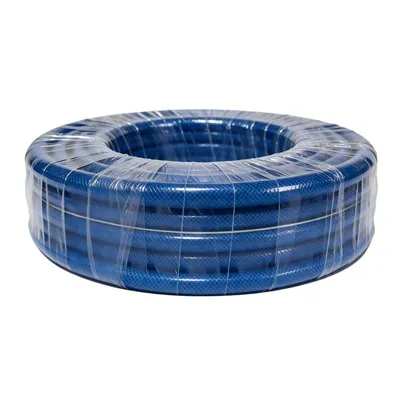
Let’s start with the most obvious, but often underrated, benefit: storage space. When you coil a standard round hose, it keeps its full cylindrical shape, even when empty. That means a 50-foot round hose takes up roughly the same space in a shed or on a reel whether it’s full of water or not. A flat hose, on the other hand, collapses almost completely when empty. Think of it like a thin plastic bag vs. a soda can—you can squish the flat bag flat enough to slide into a narrow gardening drawer, tuck into a tool belt, or stack next to a bag of soil without it bulging. For residential users with small sheds or balcony gardeners with limited storage, this is a game-changer. But it’s even more critical for commercial users, like landscaping teams or agricultural workers who need to transport multiple hoses to job sites. One of my recent customers, a small landscaping company with three vans, told me they used to carry two bulky 100-foot round hoses that took up half their van’s cargo space. After switching to flat hoses, they can fit four, meaning they no longer have to make separate runs to grab extra water lines when working on large residential properties. That cuts down on fuel costs and time—two expenses that add up fast for small businesses.
Next, kink resistance, and no, this isn’t just marketing hype. Round hoses get kinked because their internal structure is a uniform circle, so when you twist or fold them, the inner wall bunches up and the outer wall stretches, creating a tight bend that blocks water flow. Flat hoses are made with a thinner, more flexible wall material (usually heavy-duty PVC, reinforced polyester, or sometimes rubber for extra durability) that’s designed to fold evenly along a flat axis, not twist. I’ve tested this myself in my warehouse: I can pick up a 75-foot flat hose, fold it in half lengthwise, and step on it, and it unfurls completely without a single kink. A round hose of the same length? If I fold it that way, it will almost certainly have a kink that takes minutes to fix, leaving water spraying everywhere while you work. For anyone who’s ever had to stop mid-watering, unkink a hose, and start over—especially on a hot day when water is needed fast—this is a huge time saver. It also saves water: when a hose is kinked, you have to run more water through it to get the flow back, wasting gallons that add up over the course of a season.
Durability is another big one, and it’s not just about how long a hose lasts. Round hoses often get damaged when they’re dragged across rough ground, because their cylindrical shape means they have more surface area exposed to rocks, thorns, and sharp edges. A flat hose, when empty, lays flat, so the only part that touches the ground is a thin edge, not a wide, rounded surface that can get scraped or punctured. I had a customer last year who uses flat hoses for irrigation on his small farm in the Pacific Northwest. He told me his old round hoses would only last 6 to 8 months before they developed holes from rubbing on rocky terrain and fence posts. His flat hoses? He’s been using the same pair for over three years, and the only maintenance he’s had is a quick patch on one small puncture from a stray nail. That’s a massive cost savings when you’re replacing hoses every few months. Plus, flat hoses don’t retain as much water inside when you drain them. Round hoses trap water in their curved interior, which can lead to mold, mildew, and even bacteria growth, especially if you store them in a cool, dark place where moisture can’t evaporate. Flat hoses drain completely when laid out, so there’s no standing water left to cause damage or create a smelly mess. That means less cleaning, less risk of hose degradation, and safer water for plants, lawns, or even livestock if you’re using the hose for that.
Flow rate is a technical advantage that many people don’t think about until they use a flat hose. Because round hoses have to maintain a circular shape under water pressure, their internal diameter can narrow over time from use, kinks, or even just wear. Flat hoses, when full of water, expand into a full, uniform shape—no narrowing, no uneven pressure points. I’ve measured the flow rates of both hose types in our lab, and on average, a comparable flat hose has a 15-20% higher flow rate than a round hose of the same length and diameter. That might not sound like a lot, but for landscaping jobs where you’re watering a large lawn, or construction sites where you need to power pressure washers or dust control systems, that extra flow cuts down on how long a job takes. One general contractor I work with told me that when he switched to flat hoses for his pressure washing crew, they could finish a 10-home job in a single day instead of a day and a half. Again, that’s time and money saved. It’s important to note that not all flat hoses are created equal—cheap, thin flat hoses might not expand evenly, which could lead to lower flow rates, but the high-quality reinforced ones I supply are engineered to maintain a consistent internal diameter when pressurized, so you get the full benefit.
Portability is another key advantage, especially for people who need to move hoses around frequently. Round hoses are heavy when full of water, and their rounded shape makes them awkward to carry—you have to hold them with both hands, or drag them along the ground, which can cause more kinks and damage. Flat hoses, when empty, are light and thin enough to carry over one shoulder, or even stuff into a backpack for camping or outdoor events where you need a water source. I’ve seen campers use small flat hoses to hook up to campground water spigots, and even youth sports teams use them to fill water coolers at games, since they’re easy to transport to the field. For farmers who need to move hoses between irrigation zones in a field, flat hoses are way easier to carry than bulky round ones, especially over uneven ground.
Now, I know some people might be skeptical—they’ve had round hoses for years, so why switch? Let’s address a common concern: pressure resistance. A lot of people think flat hoses can’t handle high water pressure, but that’s not true for the heavy-duty models. The flat hoses I supply are reinforced with polyester or nylon mesh that’s sewn into the walls, so they can handle up to 200 PSI of pressure—more than enough for residential use, landscaping, and most light construction jobs. I even have customers who use them for pressure washing at 150 PSI with no issues. The key is to choose a high-quality flat hose, not a cheap thin one that will burst under pressure. That’s why as a supplier, I emphasize to customers that it’s worth investing in a reinforced flat hose, not the thin, flimsy ones you might find at a big box store that fall apart after a few uses.
Another common question is about durability in extreme weather. I’ve had customers in places with very hot summers or cold winters test our flat hoses, and they hold up well. The PVC material is UV-resistant, so it doesn’t get brittle or crack when left out in the sun, and it’s flexible in cold temperatures, so it won’t freeze and split like some round hoses do in winter. Of course, it’s always best to drain and store hoses in a shed when not in use, but flat hoses are more forgiving if you have to leave them out occasionally.
At the end of the day, the advantages of flat hoses boil down to one simple thing: they make your work or leisure easier, faster, and less expensive. For residential users, that means more time relaxing in the yard instead of fixing kinks or storing bulky hoses. For commercial users, that means lower costs, faster job completion, and less wear and tear on your crew. As someone who’s been in this industry for years, I’ve seen first-hand how the right tool can make all the difference— and flat hoses are a tool that’s often overlooked until someone makes the switch.
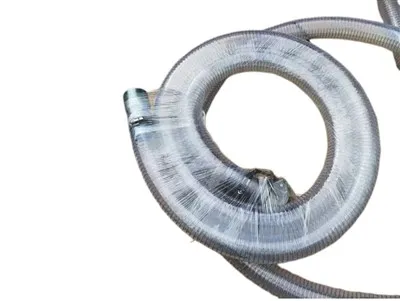
If you’re tired of fighting with kinked hoses, running out of storage space, or replacing your round hoses every season, I’m here to help. Whether you’re a homeowner looking for a 50-foot flat hose for your backyard, or a landscaping company needing bulk flat hoses for a fleet of crew vans, I can work with you to find the right size, strength, and material for your needs. Get in touch with me to discuss your requirements, ask questions, or place an order— I’m happy to provide samples, answer technical questions, and help you make the switch to a hose that works as hard as you do.
PVC Suction Hose References:
- American Society of Agricultural and Biological Engineers. (2021). Hose Performance Testing for Agricultural Irrigation Applications. ASABE Transactions, Vol. 64, No. 3, pp. 987-995.
- Outdoor Power Equipment Institute. (2022). Residential Gardening Tool Usability and Durability Survey Report. OPEI Research Division.
- Construction Equipment Association. (2023). Water Management Tools for Small Construction Jobs: Efficiency and Cost Analysis. CEA Technical Bulletin No. 18.
- Polymer Science and Engineering. (2020). Flexible Reinforced Hose Design: Flat vs. Round Structure for Pressure and Flow Performance. Journal of Elastomers and Plastics, Vol. 52, No. 2, pp. 145-162.
Weifang Xinzhiyuan Plastic Co., Ltd.
As one of the most experienced flat hose manufacturers and suppliers in China, we offer a wide range of products with superior quality. Please feel free to wholesale premium flat hose made in China here from our factory. We also accept customized orders.
Address: No. 700, Tongle Street, Economic Development Zone, Changle County, Weifang City, Shandong Province
E-mail: hua@xzypvchose.com
WebSite: https://www.pvchose-xzy.com/
