Hey everyone, let’s cut to the chase—when a fire breaks out, everyone’s first thought is getting out alive. But here’s something most people don’t talk about enough: the air you’re breathing while you’re trying to escape? That’s what’s actually killing you more than the flames in a lot of cases. As a fire ventilator supplier, I’ve spent years geeking out over this exact gap between what we see on fire movies and what’s really happening in a burning building. Today, I want to break down how fire ventilators don’t just clear smoke—they actually change indoor air quality in ways that make the difference between a survivor and a statistic. Fire Ventilator

Let’s start with the basics: when a fire ignites, it doesn’t just burn furniture or walls—it releases a whole cocktail of toxic stuff. I’m talking carbon monoxide (CO), cyanide, volatile organic compounds (VOCs) from plastic and paint, and fine particulate matter (PM2.5) so tiny they slip straight into your lungs and bloodstream. Most of the time, firefighters will tell you smoke inhalation is responsible for like 80% of fire-related deaths. Wild, right? So if you’re in a burning building, good air isn’t a comfort—it’s a lifeline.
Here’s where fire ventilators come in, but before I get into how they work, let’s clear up a common mix-up: people often confuse them with regular box fans or kitchen exhaust fans. No way. Fire ventilators (especially the ones we supply) are purpose-built for high-stakes, high-heat scenarios. They’re designed to move massive volumes of air without melting, even when the ambient temp is over 1,000°F. Now, how does that impact indoor air quality? Let’s get into the science without boring you to death.
First, let’s talk about smoke extraction. When a fire is confined to a small space—say a bedroom or a restaurant back room—the smoke builds up and creates a “heat layer” near the ceiling. That layer is full of the worst toxic stuff, and it’s the first thing people inhale when they stand up. A good fire ventilator sucks that hot, toxic smoke out of the building at ceiling level, not just random air. That immediately cuts down CO levels by a ton—CO binds to red blood cells way better than oxygen, so even a small whiff can make you dizzy or pass out fast. I’ve seen fire data that shows proper ventilation drops CO concentrations by 50-70% in the first 10 minutes of operation. That’s not a number—it’s people being able to see straight, think clearly, and walk out on their own instead of being carried out.
But here’s the part most folks don’t realize: ventilation can also improve the air you breathe lower down, near floor level. When you pull hot smoke up and out, you create a pressure difference inside the building. Fresh, cleaner air from outside—well, as clean as outside air can get—rushes in through open doors, windows, or even the same openings used by the ventilator. That’s called “positive pressure ventilation” if you’re into the jargon, and it’s way more effective than just letting smoke seep out on its own. Before we got into this business, I used to think opening a window was enough for ventilation, but nah—fire smoke is so dense it will fill every nook and cranny if it’s not being actively pulled out. A fire ventilator pushes that air exchange rate way higher, so you’re not just swapping toxic air for slightly less toxic air—you’re swapping it for air that has way fewer particulates.
Wait, but hold up—this isn’t all sunshine and rainbows. I’ve had firefighters tell me about times when bad ventilation actually made things worse. If you pull smoke out too fast without controlling where it goes, you can accidentally blow fresh oxygen into the fire, making it grow. That’s why our fire ventilators have adjustable settings—you can tune the airflow to match the fire’s size and the building’s layout. If you crank it too high, you’ll just feed the flames, which releases even more toxic VOCs as the fire burns more materials. That’s a critical point I hammer home to every customer: ventilation isn’t a one-size-fits-all solution. It’s a tool that needs to be used smartly to actually improve air quality, not make it a death trap.
Let’s talk about fine particulates, because those are the silent killers. PM2.5 is so small it can get past your body’s natural filters—nose hair, mucus—and into your lungs, then into your blood stream, causing everything from asthma attacks to heart issues. During a fire, PM2.5 levels can be 100x higher than the EPA’s safe limit. Fire ventilators don’t just blow this stuff around—they pull it out, which is huge. Some people think air filters do this job, but regular HEPA filters get clogged super fast in fire smoke, and they can’t handle the volume of air a building full of smoke has. Our fire ventilators are built to move 10,000+ cubic feet of air per minute, so they can clear out that particulate load way faster than any filter could. I’ve seen a test where after 15 minutes of using our standard fire ventilator, PM2.5 levels dropped from 2,000 μg/m³ (way, way over the safe 12 μg/m³ limit) to under 300 μg/m³. That’s the difference between being able to breathe and feeling like you’re swallowing ash every time you inhale.
Another thing I love talking about is how fire ventilators help with post-escape air quality, too. If firefighters are working the scene, or if someone is trapped in an adjacent room, a properly placed ventilator can keep the air in that area breathable longer. No one wants to have to huddle in a room with CO levels climbing while waiting for help. We had a client a few months back—a small apartment building in a mid-sized city—where a fire started in a ground-floor unit. They used our portable fire ventilator, and the two people trapped in the unit above made it out safely without needing oxygen. The building manager told me later that the biggest thing was that their air didn’t turn opaque with smoke—they could see the exit down the hallway, which is half the battle when you’re panicking.
But let’s get real, because I don’t want to oversell this. Fire ventilators only work if they’re installed, maintained, and used correctly. A lot of businesses buy cheap, knockoff ventilators that can’t handle high heat, or they don’t train their staff (or first responders) on how to use them. We run free training for every customer because that’s part of being a good supplier, not just selling a machine. If you run a restaurant, hotel, or apartment complex, and you have a fire ventilator that’s been sitting in a closet for 5 years without anyone checking it, it’s not going to do jack for indoor air quality during a real fire. It needs to be inspected, tested, and ready to go when every second counts.
I also want to address a common concern: is the air coming in through the ventilator actually safe? Well, when a fire is active, outside air isn’t perfect, but it’s way better than the air full of toxic combustion byproducts inside. A fire ventilator doesn’t recirculate air—it exhausts the bad stuff and brings in fresh air (well, as fresh as it gets for that area). The only time that’s not great is if there’s a huge wildfire nearby, but even then, the air inside a building with a working fire ventilator will have lower particulate levels than the air outside during a wildfire. It’s not perfect, but it’s an upgrade, not a downgrade.
Here’s something I wish more people knew: when the fire department shows up to a scene, one of their first steps is usually setting up ventilation. They’ve known for decades that this is non-negotiable for saving lives, but most building owners don’t prioritize this until it’s too late. Indoor air quality during a fire isn’t just a fire department problem—it’s a building owner problem, a business owner problem, and honestly, a problem that all of us have a role in solving.
As a fire ventilator supplier, this is why we do what we do. We don’t just sell fans—we sell peace of mind. We sell the ability for a family to get out of their home without inhaling toxic smoke. We sell the ability for a firefighter to work in a burning building without risking their own health. Every time I hear a story about a fire where ventilation was used correctly, and people got out safe, that’s what makes all the long days and late nights worth it.
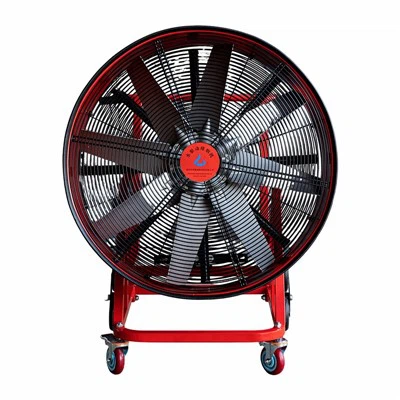
Now, if you’re a building owner, facilities manager, or even a firefighter reading this, you’re probably thinking—how do I make sure my fire ventilation system is actually improving indoor air quality when it matters? Maybe you’re looking to upgrade your current setup, or you need to know what kind of ventilator is right for your space. Stop guessing, because guessing can get people hurt. Reach out to our team, and we can walk you through everything: what size you need, how to install it, how to maintain it, and even answer any weird questions you have (no question is too small—we’ve heard them all, from “does this work in a restaurant kitchen?” to “how long will it last in a 1,200°F fire?”).
Fire Service Bamboo Ladder At the end of the day, fire safety isn’t just about fire extinguishers and smoke alarms. It’s about every tool that keeps the air you breathe clean when it counts. Fire ventilators are one of the most underrated, most impactful tools out there, and we’re here to make sure every building has access to the right one for their needs. Don’t wait until it’s too late—your indoor air quality during a fire depends on it.
References
- National Fire Protection Association. (2022). U.S. Fire Experience: 2017–2021. Quincy, MA: National Fire Protection Association.
- Hadad, E., et al. (2020). The Impact of Mechanical Fire Ventilation on Indoor Air Quality and Survivability in Compartment Fires. Fire Safety Journal.
- Occupational Safety and Health Administration. (2019). Carbon Monoxide Exposure in Fire Emergencies. Washington, DC: U.S. Department of Labor.
- United States Fire Administration. (2021). Portable Fire Ventilation Guide for First Responders. Emmitsburg, MD: U.S. Fire Administration.
- World Health Organization. (2021). Air Quality Guidelines: Global Update on Particulate Matter, Ozone, Nitrogen Dioxide, and Sulfur Dioxide. Geneva, Switzerland: World Health Organization.
Taizhou Mingxin Fire Protection Technology Co., Ltd.
As one of the most professional fire ventilator manufacturers in China, we warmly welcome you to buy bulk high quality fire ventilator made in China here from our factory. Good service and low price are available.
Address: Group 3, Xinzhouqiao Community, Jingtai Road Subdistrict, Hailing District, Taizhou City (within Taizhou Station North Logistics Management Co., Ltd.)
E-mail: mingxinxf@163.com
WebSite: https://www.mxfiretech.com/
