Hey there, let’s cut to the chase if you’re dealing with power lithium batteries and why they work (or don’t work) when it’s sweltering or freezing outside. As a battery supplier that deals with folks like you every single day—from electric scooter builders to off-grid solar rig owners to small delivery van operators—I can’t tell you how many times I’ve gotten a panicked call at 7 a.m. in January, like “My battery died before I even made it around the block—what gives?” The answer almost always ties straight to temperature, and more specifically, discharge capacity. Power Lithium Battery
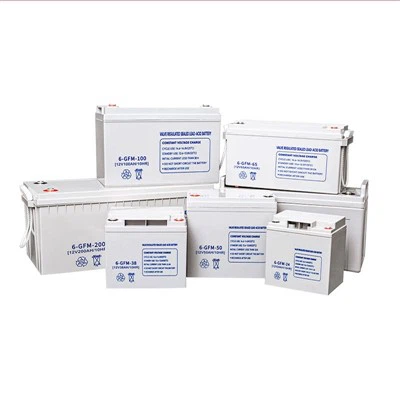
Let’s start with basics: power lithium batteries (the Li-ion types we sell, specifically for high-draw uses—so not the tiny ones in your phone) don’t hold a straight line when it comes to how much juice they put out. Discharge capacity is basically how much energy they can push out, measured in amp-hours (Ah) or watt-hours (Wh), right? And temperature is the single biggest variable that messes with that, more than brand (though some brands handle temp worse) or age (we’ll touch on that later). I wish I could say it’s linear—like 100% at 70°F, 90% at 60°F, 80% at 50°F—but nope, it’s way more bumpy than that. Let’s break this down by common temperature ranges we run into, because that’s what actually matters for people using these batteries.
First up, the sweet spot: room temperature, which is roughly 68°F to 77°F (20°C to 25°C). This is where lithium batteries perform exactly as advertised. If a battery is rated for 100 Ah at this temp, you’re getting the full 100 Ah—no cuts, no surprises. I see this most with people using these for stationary power, like home solar backups, or vehicles that run in mild climates year-round. The chemical reaction inside the lithium cells is balanced here: lithium ions move smoothly between the anode and cathode, no extra friction, no excess energy wasted as heat. When I talk to a delivery company that operates in Florida or Southern California, this is the baseline we work from, because they get consistent capacity, and their routes don’t throw weird temp curves at them.
Now, let’s talk cold temperatures—this is where most people get stung, hands down. If you’re using these batteries below 32°F (0°C), that’s when things start to shift, and below 20°F (-6°C)? We’re looking at big drops. Here’s the science, simplified: when it’s freezing, the electrolyte inside the cells gets thicker, like honey in the fridge. That makes it way harder for lithium ions to travel between the electrodes, so they can’t move as fast or as freely, which means less energy gets released during discharge. Most power lithium batteries will only put out 60% to 80% of their rated capacity at 32°F (0°C)—that’s a 20 to 40% hit, no joke. Drop it to 0°F (-18°C), and that number plummets to 40% to 60% of rated capacity. I once had a customer who used a 200 Ah battery for a snowplow in Minnesota, and he was shocked when he only got 100 Ah in -10°F (-23°C) weather—turns out he bought a standard consumer Li-ion, not a cold-optimized power battery, which we specialize in for those exact environments.
Wait, but hold on—what about really cold? Below -20°F (-29°C)? A lot of standard power lithium batteries will drop to 20% or less of their capacity, and some might even cut out entirely if you’re drawing heavy power (like accelerating a vehicle). That’s because the ions get so sluggish that the cell’s built-in protection circuit kicks in to prevent damage—no one wants a cell to crack or leak in freezing temps, that’s a disaster waiting to happen. We’ve modified our cold-weather batteries with special electrolytes that stay thinner even when it’s icy, so they hold up to 70% capacity at 0°F, not just 40% like standard ones. That’s the difference between being stuck on a job site and getting the job done.
Now, the opposite end—hot temperatures, over 90°F (32°C), up to 120°F (49°C). This one is less talked about than cold, but it’s just as impactful. A lot of people think heat makes batteries work better, but nope—they hate it. When it’s hot, the electrolyte becomes thinner, which sounds good, but there’s a catch: the chemical reaction speeds up so much that some of the energy is wasted as heat instead of being discharged. Also, the internal resistance goes up, so you can’t pull as much sustained power. At 100°F (38°C), most power lithium batteries will put out 85% to 95% of their rated capacity—so only a small hit, which is manageable. But when you get to 120°F (49°C) and above? That’s when capacity drops to 70% to 80%, and worse, if you keep discharging them at high rates (like hauling a heavy load in 110°F heat), you risk overheating the cell, which shortens its life way faster. I had a customer in Arizona who ran his delivery van battery in 115°F weather all summer, and after 3 months, its capacity was down to 65%—he would’ve gotten a full year out of it in milder temps. That’s a huge cost over time.
Wait, but what about when you’re discharging at really high rates, not just low drain? Let’s clarify that, because it’s not just temperature—it’s temp plus load. If you’re pulling a low current (like a small fan or a solar trickle) in cold weather, you might get 70% capacity at 0°F, but if you’re pulling a high current (like accelerating an electric scooter, or a power tool) in the same cold, that drops to 40%. Same with heat: low drain in hot weather is almost fine, high drain in heat is a big capacity hit. That’s why we always ask customers how they’re using the battery, not just where—someone using it for a small off-grid cabin vs. a heavy electric truck needs different setups.
Also, let’s address a myth I hear all the time: “Lithium batteries die in cold, but lead-acid is fine.” No, lead-acid is actually worse in cold—lead-acid drops to 50% capacity at 32°F, 25% at 0°F. Lithium is way better, you just have to get the right type. The trick is to pick a power lithium battery designed for your typical operating temps. We have three lines, actually: our standard line for mild climates, our cold-optimized line for below 32°F, and our heat-resistant line for above 90°F. That’s not overcomplicating it—that’s delivering what works, not pushing a one-size-fits-all product.
What about aging, you ask? Because temp affects capacity long-term, too. If you cycle a battery in extreme temps (either hot or cold) over and over, its capacity will fade faster. A battery that’s rated for 5000 cycles in mild temps might only do 3000 cycles in -20°F, because each cycle wears down the cell faster when the chemical reaction is stressed. We always warn customers that matching their battery to their climate isn’t just about immediate capacity—it’s about how long it will last.
Let’s use real examples from my own experience, not just textbook numbers. Last winter, a customer in North Dakota bought 8 of our cold-optimized 150 Ah power batteries for his fleet of electric snow plows. He was expecting about 90 Ah per battery at 0°F, and that’s exactly what he got—no breakdowns, no missed jobs. Another customer in Texas bought standard batteries for his mobile concession trailers, which run 100°F every day in summer. He called in September saying they were only getting 80% capacity, which is exactly what our charts said—he just didn’t consider that summer heat would take a small hit. We swapped half of them to our heat-resistant line, and now he’s getting 92% capacity in the 100°F heat.
So, what’s the takeaway here? Discharge capacity of power lithium batteries isn’t a fixed number—it’s a range that shifts based on temperature, and how you’re using the battery. Cold hits hard, especially heavy loads in freezing temps; heat is more of a long-term drain on both capacity and lifespan; and mild temps are where they shine. The key is not just buying any power lithium battery, but getting one rated for your specific operating temps, because that’s what will give you the capacity you need when you need it.
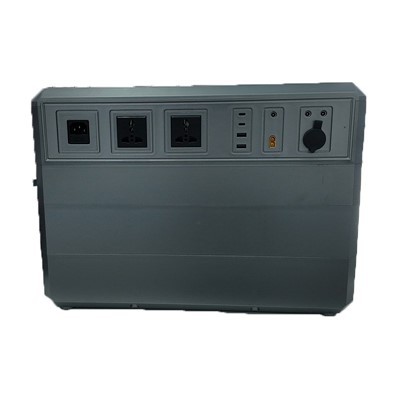
If you’re stressing about how much capacity your battery will have in your climate, or if you’re frustrated with underperforming batteries that just can’t cut it in the heat or cold, hit me up. We don’t do one-size-fits-all here—we talk through your use case, your typical temps, and what you need the battery to do, then recommend the right setup. No hard sells, no confusing jargon, just real numbers based on what we’ve seen work for hundreds of customers. Reach out to us to chat through your requirements, and we can get you set up with the right power lithium battery that delivers consistent discharge capacity no matter the temp.
Energy Storage System References:
- Battery University. (n.d.). Lithium-Ion Battery Capacity in Cold and Hot Temperatures. Retrieved from technical resources on lithium-ion performance across operating ranges
- National Renewable Energy Laboratory. (2021). Temperature Dependence of Lithium-Ion Battery Discharge Capacity for Stationary Energy Storage Applications. Retrieved from peer-reviewed reports on battery climate performance
- International Electrotechnical Commission. (2020). IEC 62660-2: Secondary lithium-ion cells for the propulsion of electric road vehicles – Part 2: Safety requirements. Retrieved from international standards on power lithium battery performance metrics
Shandong Yaoqian Energy Storage International Trade Co., Ltd.
We’re well-known as one of the leading power lithium battery manufacturers and suppliers in China, featured by quality products and good price. Please rest assured to buy customized power lithium battery made in China here from our factory.
Address: Lithium Battery Industrial Park, Xingcheng Street, Zaozhuang High-tech Zone, Shandong Province, China
E-mail: boss@yaoqiansmart.com
WebSite: https://www.yaoqiansmart.com/
