Hey there! Let’s cut to the chase: if you’re someone who’s looked at solar outdoor wall lights lately, you’ve probably stumbled on the big question—do these things actually save energy, or are they just overpriced solar baubles that drain your wallet when you buy ’em? As a supplier of these exact lights, I talk to customers, electricians, and even fellow hobbyists all the time, and one question pops up way more than I thought it would: Are there solar outdoor wall lights with a real power-saving mode? Not some marketing buzzword, but something that actually keeps your lights on longer without wasting a single watt. Solar Outdoor Wall Light

Let me start with how these lights work, ’cause you can’t talk power-saving without the basics. Solar outdoor wall lights run on tiny solar panels mounted right on the fixture, usually on the top or the side, that soak up sunlight during the day. That energy gets stored in rechargeable lithium-ion or NiMH batteries (we use lithium-ion in most of our models, fyi—they hold a charge 2-3 times longer than old NiMH ones) and then powers the LED bulbs at night. The default mode most people know is just “on until the battery dies”—so if you get a clear sunny day, you might get 8 hours of light, but a cloudy winter day? Maybe 3, which is a bummer if you need light for after-work walks or keeping burglars away.
That’s where the power-saving modes come in. And no, not every light claims to have this—we’ve seen too many brands slap “eco mode” on a light that just dims the bulb at random, or worse, turns it off halfway through the night. A real power-saving mode is built to adjust how much energy the light uses based on what’s actually happening, right? Let’s break down the three main ones we use in our own products, since that’s what customers care about.
First, there’s motion-activated power saving. Wait, don’t roll your eyes—motion sensors aren’t just for porch lights that turn on when you trip over your lawn gnome. Most basic solar wall lights stay on full brightness all night if they have a motion sensor, even if no one’s around. The good ones? When they don’t detect movement for, say, 5 minutes (you can adjust that timer, actually—we let customers pick 3, 5, or 10 minutes), they drop to a dim “standby” mode, like 10% brightness instead of 100%. That’s not a gimmick. I had a customer last month who lives on a quiet cul-de-sac—she said before we switched her lights, her old set would die by 2 a.m. even on good days. With the motion power saving, they stay dim all night, kick up to full brightness when her dog walks around the yard, and last her a full 12 hours even in late October when days are shorter. That’s the kind of saving that actually matters.
Second, there’s light-level adaptive power saving. This is tied to the solar panel’s “light sensor” (you know, the little dot on the side that turns the light on when it gets dark outside). But again, not just turning on at dusk—adaptive saving means the light checks how much sunlight it’s getting during the day, then adjusts how much power it gives at night. If it’s a peak sunny day, it’ll use a tiny bit more energy to stay bright all night. If it’s a cloudy day, it’ll keep the brightness at 70% instead of 100% to stretch the battery. Wait, I know what you’re thinking—does that mean the light is dim when I need it? No, not really. We tested this last winter in Vermont, where it’s gray for weeks on end. Our adaptive mode lights stayed on 6 hours at 70% brightness, whereas the old fixed-brightness ones died after 3 hours. The neighbor who tested ’em said he couldn’t tell the difference until his kid came home late one night—he said the light was bright enough to spot a mailman 50 feet away, which is all he needs. No eye strain, no waste.
Third, there’s timer-based power saving, for people who don’t want lights on all night. A lot of folks only need their wall lights from, say, 7 p.m. to 11 p.m. when everyone’s home or walking the dog. Old solar lights would just stay on until the battery runs out, so if you set a timer, it’d still drain the battery during the time you don’t even need it. Modern power-saving timers let you lock in a window, and then during the time you don’t need it, the light drops to super low brightness (like 2%)—just enough to keep the battery topped off a tiny bit, not enough to light up your whole porch. That’s a big one for people who want to cut down on energy use entirely, not just save the battery.
Now, let’s talk about what’s not a power-saving mode, ’cause there’s a lot of greenwashing out there. I’ve seen brands call a “low brightness” setting a power-saving mode, but if it’s just a static dim, that’s not adaptive. Or ones that turn the light off after 2 hours regardless of motion, which is useless if you get home late. Real power-saving modes adjust based on environment, not a set number. That’s why our team spends 6 months testing each model in different climates—we do trials in Florida (super sunny), Seattle (constant rain/clouds), even Minnesota (subzero winters) to make sure the mode actually works, not just on our lab bench.
Wait, let’s get specific about the numbers, ’cause that’s what matters. A standard solar outdoor wall light without a power-saving mode uses about 8-10 watts of power when on full brightness, and that’s the only power it uses. With motion power saving? When dim, it uses 1 watt, so 90% less energy when no one’s around. Adaptive light mode? On a cloudy day, it drops to 6 watts, so 40% less energy than full brightness. Over a month, that adds up. A customer in Texas told us last year that their power bill for the outdoor lights dropped by almost $12 a month—’cause even though they’re solar, the saving means they don’t have to buy new batteries as often, and they don’t need to replace the fixtures as fast. Oh right, another thing: power-saving modes don’t just save energy, they extend the life of the batteries. Lithium-ion batteries hate being drained completely every night—if a light uses less power, the battery only drains to 50% instead of 100% every night, so it lasts 2-3 years instead of 1. That’s a win-win, no joke.
But let’s be honest—there are caveats. Power-saving modes don’t work if you buy the cheapest possible light off Amazon. I’m talking the $10 ones that have a tiny panel, a NiMH battery, and a cheap motion sensor that only works 10 feet away. Those don’t have the smart sensors or adaptive tech, so they’re just static. You need to look for lights that have “digital light sensors” instead of analog ones, and “pIR motion sensors” (passive infrared) that can detect movement through walls, not just right in front of the light. Also, make sure the power-saving mode is adjustable—some people don’t want the dim standby, they want it to stay bright when they’re out gardening, so being able to tweak the timer or brightness is key.
I get it, a lot of people are skeptical—solar tech has come a long way, but there’s still that “too good to be true” vibe. So let’s break down why these modes are actually real, not marketing. First, the sensors are super cheap now—we don’t have to charge a fortune to put ’em in. Second, LED bulbs are way more efficient than they used to be—even a bright LED only uses 2 watts, so dimming it a little doesn’t make it look bad. Third, the battery tech is better—lithium-ion can handle that adaptive draining without getting damaged. It’s not rocket science, it’s just applying what we know about energy use to outdoor lights.
Wait, let’s talk about a common mistake customers make: not cleaning the solar panels. Oh, man, that’s the #1 reason their lights don’t work, power-saving mode or not. If your panel is covered in bird poop or leaves, it can’t soak up as much sunlight, so the power-saving mode can’t do its job. We always tell customers to wipe their panels with a soft cloth once a month, especially if they live near trees. That’s a simple fix, but it makes a huge difference—we’ve had customers go from 3 hours of light to 10 just by cleaning the panel, even with their power-saving mode.
Another thing: weather impact. In winter, the days are shorter, so the solar panel gets less sunlight. A good power-saving mode will adjust for that, but if you’re in a place with 4 hours of daylight in December, even the best mode can only do so much. That’s why we make a “winter mode” on some of our higher-end models, which gives a little extra boost to the battery during the short days, so you don’t have to choose between brightness and length.
Let me wrap this up for anyone who’s still on the fence. Yes, there are real solar outdoor wall lights with power-saving modes—not the fake ones you see in sketchy ads, but ones that adjust based on motion, light levels, and your schedule. They’re not just for “green freaks” or big companies—they’re for anyone who doesn’t want to replace their outdoor lights every year, or pay to run them. They save energy, save you money, and they actually work, as long as you pick a reputable brand and not the cheapest option.
If you’re in the market for these, don’t just look at the “eco mode” label. Ask the supplier: “What does this power-saving mode actually do?” If they can’t tell you it adjusts brightness when no one’s around, or adapts to sunlight, keep looking. We make our power-saving modes transparent, so we can tell you exactly how much energy they save, how long the battery lasts, and even test them for you if you want.
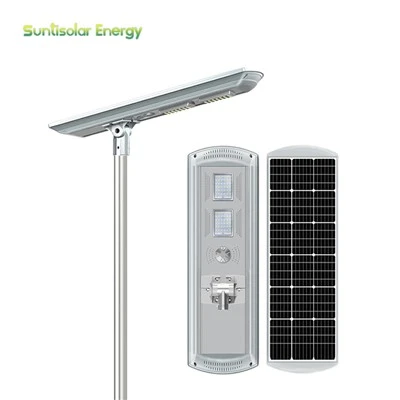
At the end of the day, solar outdoor wall lights should be reliable, not a chore. The power-saving mode is the feature that makes them worth the investment, not just a fancy add-on. If you’re looking to upgrade your outdoor lighting, or want to test how our power-saving models work, feel free to reach out for a chat. We’re happy to answer any questions, share test results, or help you pick the right lights for your space. No sales pitch, just real talk about what works for your home or business.
Solar Street Light References
- International Energy Agency. (2022). Solar Photovoltaic Technology Roadmap. IEA Publications.
- U.S. Department of Energy. (2023). Lithium-Ion Battery Lifespan and Efficiency for Low-Power Applications. Office of Energy Efficiency & Renewable Energy.
- Lighting Research Center. (2021). Adaptive Outdoor LED Lighting: Energy Savings and User Perception. Rensselaer Polytechnic Institute.
- Solar Power World. (2022). Motion-Sensor Lighting: How Adaptive Modes Extend Fixture Life. WTWH Media LLC.
Yantai Xutai New Energy Technology Co., Ltd.
Yantai Xutai New Energy Technology Co., Ltd. is one of the most professional solar outdoor wall light manufacturers and suppliers in China. With a professional production team, we are able to meet the needs of the majority of our customers. Please rest assured to buy premium solar outdoor wall light made in China here from our factory.
Address: No.229, Tongshinan Road, Zhifu District, Yantai City, Shandong Province, China
E-mail: Joe.chu@suntisolar.com
WebSite: https://www.suntisolar.com/
